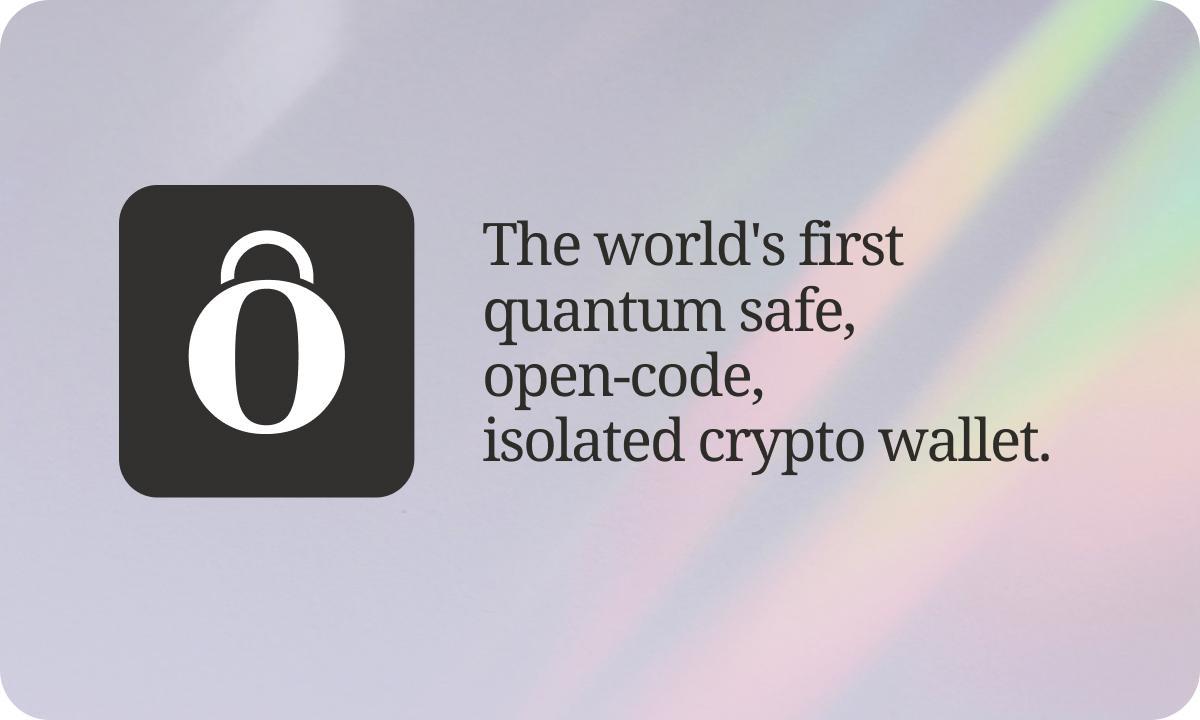
Lock.com, developed by Quantography Labs, has entered early access as a hardware-free crypto wallet built around an isolated, air-gapped security approach. The platform is designed to function as an isolated crypto wallet without relying on third-party hardware manufacturers or proprietary device supply chains. It uses devices users already own, rather than requiring dedicated, purpose-built hardware.
What "Isolated Signing" Actually Means Structurally
Private keys remain on a fully offline signer, while transactions are created and broadcast on a separate, connected device. Private keys never touch the internet under this architecture. The device holding sensitive key material is never network-connected at any point. This structurally eliminates a broad category of remote attack vectors that affect internet-connected key storage.
Why This Was Built as a Response to a Specific Problem
The platform was built out of frustration with how crypto security works today. Too many people are still losing funds in ways that shouldn't be happening. That's not because self-custody itself failed as a concept, but because the software environment surrounding the hardware was never built to the same security standard as the hardware itself. The goal is closing that gap structurally, at the architecture level, rather than through user education or warnings layered on top of existing vulnerable software.
What Makes This Architecture "Post-Quantum"
The architecture integrates post-quantum cryptographic standards, ML-DSA signatures and ML-KEM key encapsulation, alongside the isolated signing model. These are standardized post-quantum cryptographic algorithms designed to remain secure even against attacks from sufficiently powerful quantum computers. That's a longer-horizon security consideration, distinct from the more immediate isolated-signing protection against conventional remote attacks.
Why Removing the Hardware Requirement Matters
By designing the system to work with devices users already own, this approach removes the barrier of needing to purchase and manage dedicated hardware wallet devices. It also removes the supply-chain trust questions that come with sourcing purpose-built hardware from third-party manufacturers. This distinguishes the product from traditional hardware wallet products, which require users to acquire and physically safeguard a dedicated device.
Who Built Lock.com and Why
Quantography Labs is an investment and technology firm focused on secure finance, digital assets, and applied research. The company develops privacy-focused, quantum-ready systems designed to advance the future of digital asset security and infrastructure. Lock.com represents its first publicly released product.
What Early Access Actually Means for This Launch
Entering early access rather than a full public launch signals that Lock.com's architecture and user experience are still being refined based on real-world usage before a broader rollout. That's a common approach for security-critical infrastructure products, where getting the underlying architecture right matters more than rapid user acquisition at launch.
Structural, architecture-level approaches to eliminating a specific category of security risk like this reflect the same design philosophy seen in Casper Network's quantum-safe cryptography initiative. Both address longer-horizon security concerns before they become urgent, near-term problems.
Glossary
- Air-gapped: A security approach where a device is physically isolated from network connections, preventing remote access to sensitive data it holds.
- ML-DSA / ML-KEM: Standardized post-quantum cryptographic algorithms for digital signatures and key encapsulation, designed to remain secure against quantum computing attacks.
- Isolated signing: A wallet architecture where the device holding private keys never connects to the internet, with transaction creation and broadcasting handled by a separate, connected device.
Disclaimer
Read this as informational content only; it does not constitute financial or investment advice. Self-custody wallet solutions carry technical and user-error risk regardless of underlying architecture. Confirm current details directly through official Lock.com announcements.